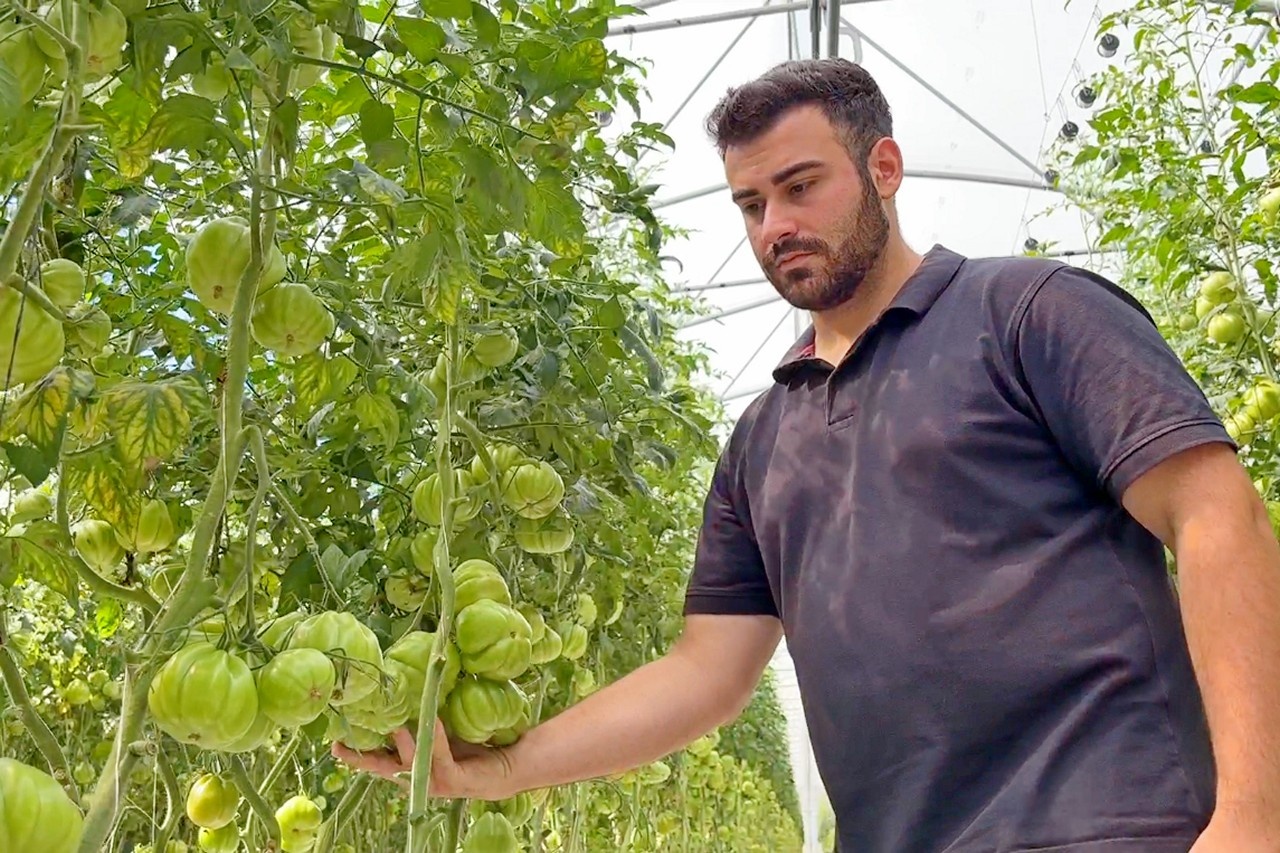
In the rural area of Emilia, in northern Italy, Marco Anzola’s agricultural farm in the town of Boretto, in the province of Reggio Emilia, located along the banks of the Po River, is charting a clear course toward zero-residue agriculture. The farm, known for its high-quality oxheart tomatoes, which are…
I just planted over 120 root cuttings into the side of a hill as part of an erosion control project. I’m watering 1-2x per day (light waterings so it can soak in). How long until I should see leaves emerge above ground? These are Bocking 14.
In other news, I was given a mostly wilted True Comfrey division earlier in the summer. I planted it and watered well for a week or so and then forgot about it. Of course there’s no sign of life at this point. Could the roots still be alive and come back in the spring?
I am buying a significant amount of land (between 20ac and 80ac, to give you an idea) and I want to turn it into a generational homestead. I hope this is the right place to ask: who do I talk to, and how do I find one, to figure out how to utilize this land?
Some features of this land are:
It is gently rolling grassy hills with a steep hill on one side that is forested.
There is a seasonal stream on a border and perrineal stream running through the land.
Dead center of the property is a low spot that is in the 100yr flooding area but currently supports local vegetation, mostly shrubs, no tall trees.
Two boundaries are roads.
What I’d like to do is:
Build a small, temporary home as soon as possible and plan to build a permanent home later, with considerations of building another 3 homes over decades for family.
Either fill in the low area or use it for permaculture trees such as persimmons which are endangered now in the US but apparently thrive in shrubby areas like that.
Plant a privacy tree line on both sides with roads.
Erect insect hotels to promote pollinators, perhaps also erecting vertical solar panels on top to make use of the space?
Put something up for birds. I’m aware there’s a voracious tick eating bird that only nests in holes in trees that are near water and face a certain direction, and I believe this species is also endangered.
Plant fruiting and nutting trees.
Basically I need someone already very familiar with homesteading who already knows all the cool stuff I want to learn and can help me get what I want out of the land so even if the bombs drop I’m making acorn bread. I do work so what I set up needs to be managed by someone who is not in ag working for himself.
In this episode we talk to Claire Chambers, the founder of Meadow Lab, which develops plant products that accelerate the creation of biodiverse and high-performance landscapes.
Need to kill papper mulberry trees planing on poisoning them by drilling hole and filling with poison and sealing. Would this also kill very close by fruit trees/would the poison spread out from the roots of the tree?
1 egg (whisked) (to be used for brushing the crust before baking)
Prepare pie crusts.
Preheat oven to 400.
Combine the two sugars in a bowl. Add the peaches and toss. Cover and let stand for about 1 hour.
Drain the peaches and reserve the juice.
In a medium saucepan, combine the cornstarch, cinnamon, nutmeg and salt. Over low heat, slowly add the reserved peach juice and stir constantly, about 2 minutes, until the mixture thickens. Remove from the heat and add the butter and lemon juice. Stir until the butter has melted.
Pour into the crust and top with the second crust. Brush the top with egg wash and make small slits with a sharp knife.