guildfordcycads

Upstate NY Food Forest – 9mo Update

Upstate NY Food Forest - 9mo Update

I started a food forest in October of last year after becoming low-key obsessed with permaculture after first hearing about it a year or so earlier. Over that year I had started figuring out what plants were most compelling to me with the goals of cold hardy, edible and resilient plants. I was extremely fortunate to have a one acre area to build out that was largely a blank canvas with lots of sun access.

Planting History

In fall of 2024 I planted about 50 shrubs and trees. Probably an order of magnitude more than “reasonable” but I figured it was better to fail fast and learn fast, especially because I was able to get great prices for bare root plants thanks to some incredible local nurseries. I started building out my “berry hedge”, which will eventually be a 200′ long hedge of a huge variety of berries, Noah’s Ark style with pairs of plants for cross-pollination and “backups” planted every 5′. Got about 20-25 berries in at this time, and learned a lot about some of the cooler, less known permaculture favorites like haskap, seaberry and goumi.

Winter was an exercise in patience and I mostly sucked at it.

In spring, I planted a bunch more trees and shrubs, mostly from spring pre-orders of some cider apples, serviceberries, and some new red mulberries that had been eaten over the winter.

Successes and Failures

I recorded everything in a spreadsheet to track plant, planting date, status, any cultivar, and other notes. The trees and shrubs are at about an 85-90% survival rate at the moment, which I am very happy with given the total lack of experience going into this.

The plants that were hit the most were the red mulberries – all of them were eaten by something small enough to fit through welded wire tree cages. So, my guess is voles or potentially rabbits. Lesson learned here is to incorporate rodent guards OR just be fine with some level of predation. Time will tell how the other plants survive this winter. The shagbark hickory only has about a 40% survival rate so far, and I’m not sure why. Most just didn’t leaf out in the spring.

Several of the shrubs didn’t leaf out initially, so I assumed they had died, but all the ones that didn’t ended up just sending out new shoots and seem like they’re thriving now.

The berry hedge was fenced off and all the trees had different levels of homemade cages or tree tubes. The berries had a great survival rate so far, and most of the trees have survived as well. But, I made my tree cages far too small. They were made for the size the little seedlings were, not what they would grow to. Obvious beginner mistake, and a lesson for next time. The tree tubes seem to have done really well so far – I guess the greenhouse effect on the trees that had tubes helped them start growing much earlier and more consistently. But, plastic sucks, so I’m not sure if it’s enough of an effect yet to scale up if I do more.

I started trying to build out the other layers – herbaceous, ground, vines, etc. But since I didn’t take the time to sheet mulch, everything was rapidly overtaken by grasses. I’ve ended up being pretty happy with tall grass, because I’ve been able to chop and drop and use it as incredible mulch and biomass. But I will need a better plan to establish other layers for next year. I’m pretty sure I’ve got some asparagus, sunchokes and comfrey out in the wilds doing their thing, but I will have to wait and see (and hope I don’t accidentally mow over them).

Most planted trees/shrubs: Red mulberry, hazelnut, serviceberry, haskap, black currants

Next Steps

I’m going to try to establish larger islands around the trees and shrubs using a mixed strategy of either sheet mulching or butt-load-of-woodchips mulching. I really want to build out more protein sources in the food forest along with more nitrogen fixation. The big edible companion plants I’m aiming to establish near the trees are fava beans (using tree cages as a trellis while the trees establish), hopniss/apios americana (same thing), and more asparagus (so when I pee into the compost it’s maybe got more pest deterrence).

Top tree/shrubs for fall/next spring: heartnuts, butternuts, river locust

I’ll aim to do another update in the fall. Thanks for any feedback!

submitted by /u/Vast-Wash2775
[link] [comments]

Upstate NY Food Forest – 9mo Update Read More »
Has anyone tried flax or chia seeds to help gley a pond?

Has anyone tried flax or chia seeds to help gley a pond?

Flax and chia seeds give off a goo when mixed with water. So the idea is that when the seeds are mixed with clay and smashed into the soil and the pond is filled with water,the seeds will release their goo and help seal the pond off with the clay as well. Ive seen someone use a synthetic powder called watersave that creates a goo which helps a pond keep water in and this would be a natural alternative. Would this be a viable alternative?

submitted by /u/Affectionate_Owl9397
[link] [comments]

Has anyone tried flax or chia seeds to help gley a pond? Read More »

An early July tour of the back garden

An early July tour of the back garden

The evening of July 8th I walked into the back garden at just the right moment, the sun was low and shining into the garden from the west, working it’s golden hour magic. Naturally I started snapping photos, and so I’m sharing a rare summer garden tour…

Walking in…
Looking to the left.
And to the right, along the back of the house.
What initially caught my attention was the bromeliad bowl, it’s visible in the first photo at the top of the post. I’ve not seen the plants backlit like this before.
This weekend marks a year since this low metal bench came home with me. I bought it at during the Puget Sound Garden Fling, I’m so glad I did!
Panning to the right, the orange wall is the neighbor’s garage…
Looking at the back of the house now, due east. It’s crazy how much the light changed from the last photo. 
Looking south now, at the side of our garage, the orange wall is behind me. I’ve stepped back and I’m using that crazy iPhone feature where you can pan out for a wide angle photo. 
The Metapanax delavayi (tall lacy shrub/small tree to the left) is looking so good this year! It’s gotten really large. Also, I must share my frustration over how much the process of uploading these photos to the Blogger platform degrades their quality. I noticed it on Monday with the photos of Ann Nichols’ garden and it’s really evident here too. Bummer!
Southwest now, towards the shade pavilion.
Zoomed out.
Some of the vertical plantings on the trellis next to the garage.
And turned around now to look back at where I’d been, roughly northeast.
This area is an odd mash-up of agaves that have been there for a long while, and shady characters that I’ve planted over the last couple of years.
The ferny bits I planted last summer when the Nolina hibernica ‘La Siberica’ died…
I’m down on the patio now, looking up at Sammy (the tall Yucca rostrata) and friends.

The table planting on the stock tank base is holding up well.

Turning to look south towards the shade pavilion.

The stairs and pathway up and out of the garden…
Southwest corner of the patio…
Closer views of the shade pavilion and all the plantings on the fence…

The tall pedestal planters in the southwest corner…
And the back of the garage.

And looking down at the patio…
I hope you enjoyed this tour. Some of the photos had better light than others, but it was nice change from the cloudy day photos I’m usually forced to share for a tour, since sunlight means crazy harsh shadows.

To receive alerts of new danger garden posts by email, subscribe here. Please note: these are sent from a third party, their annoying ads are beyond my control. 
All material © 2009-2025 by Loree L Bohl. Unauthorized reproduction prohibited and just plain rude.

An early July tour of the back garden Read More »

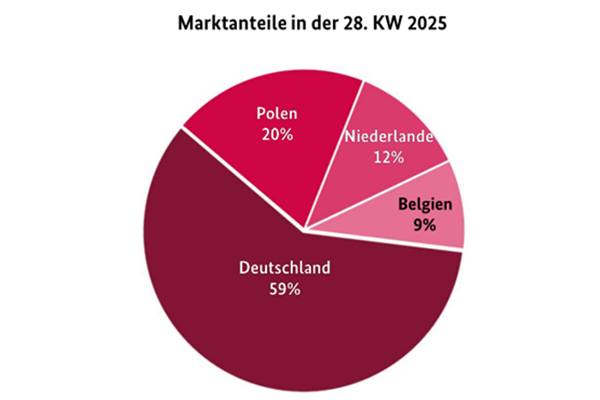
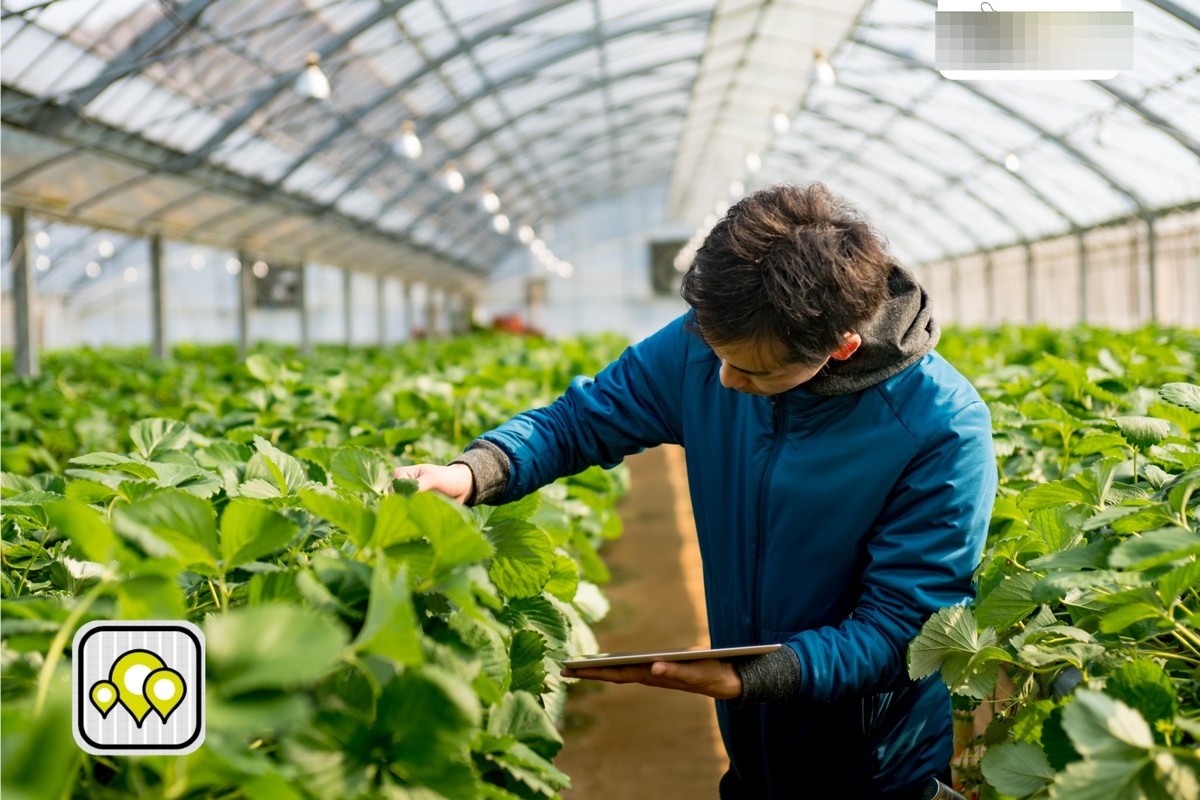
‘Dutch and Belgian strawberries were completely absent from the Hamburg wholesale market’

'Dutch and Belgian strawberries were completely absent from the Hamburg wholesale market'

The peak season for strawberries is over, and customer demand has declined noticeably. Deliveries were also limited, with rainfall in the growing regions restricting availability. The condition of the fruit deteriorated in some cases, leading to an increase in quality issues. Returns from the food retail…

Read More »

These dogs are trained to sniff out an invasive insect—and they’re shockingly good at it

These dogs are trained to sniff out an invasive insect—and they're shockingly good at it

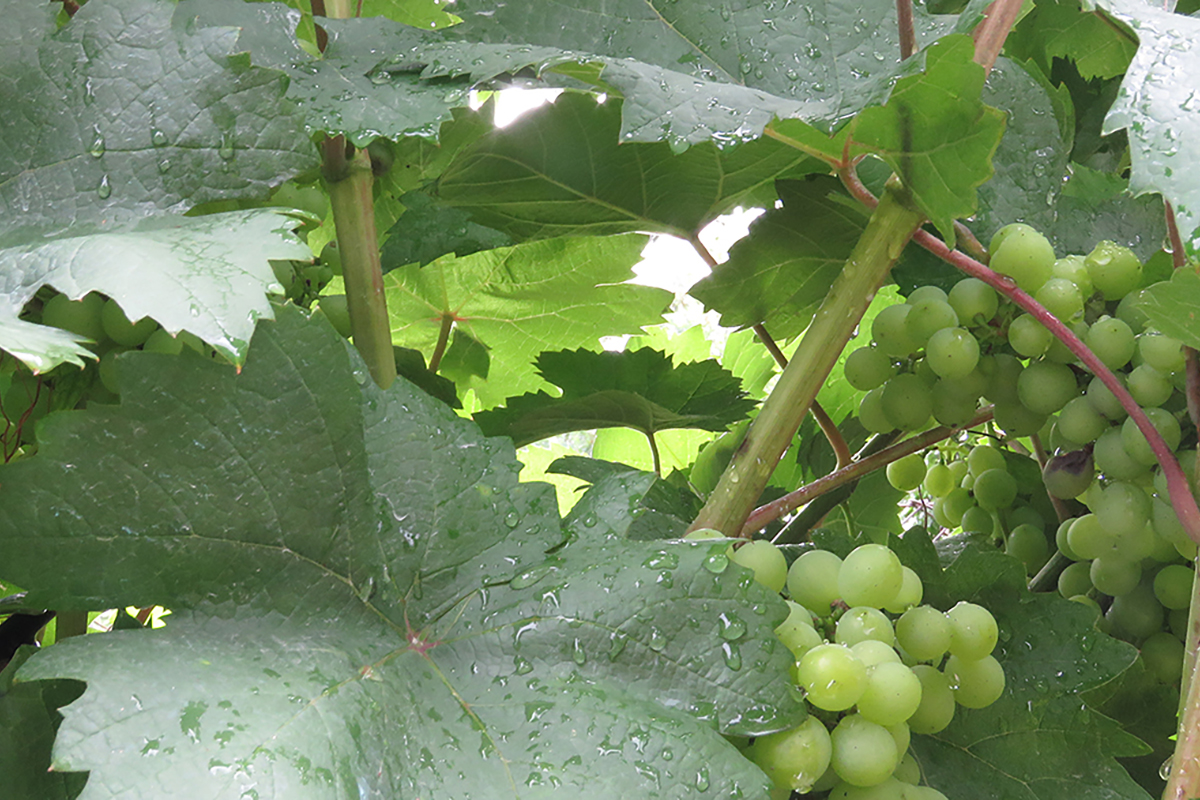
Dogs trained by everyday pet owners are proving to be surprisingly powerful allies in the fight against the invasive spotted lanternfly. In a groundbreaking study, citizen scientists taught their dogs to sniff out the pests’ hard-to-spot egg masses with impressive accuracy. The initiative not only taps into the huge community of recreational scent-detection dog enthusiasts, but also opens a promising new front in protecting agriculture. And it doesn’t stop there—these canine teams are now sniffing out vineyard diseases too, hinting at a whole new future of four-legged fieldwork.

Read More »