News Articles

Stay updated with the latest developments and discoveries in the world of plants and horticulture with our News Articles category. Here, you’ll find timely updates on conservation efforts, botanical breakthroughs, gardening trends, and industry news. Whether it’s a new species discovery, tips for sustainable gardening, or global botanical initiatives, this section keeps you informed and connected to the ever-evolving plant world. Perfect for enthusiasts, researchers, and nature lovers looking to stay in the know.

Labour should make a swift U-turn on bricks that provide nesting places | Letters

Labour should make a swift U-turn on bricks that provide nesting places | Letters

Labour party councillor Alan Quinn is disappointed with the government’s decision to block a proposal for all new homes that would help the at-risk birds

As a Labour councillor who has campaigned for over a decade to get developers to fit “swift bricks” to new buildings, I found the decision by my party’s government to block this very upsetting (Labour blocks proposal for ‘swift bricks’ in all new homes, 23 May).

As cabinet member for the environment and climate change, I was instrumental in the decision of Bury council last year to mandate that all new buildings be fitted with swift bricks. This year I’ve only seen four swifts over where I live in Prestwich. I used to see dozens, and was delighted to hear their screams as they flew over my garden.

Continue reading…

Labour should make a swift U-turn on bricks that provide nesting places | Letters Read More »

The Huntington Desert Garden as I saw it last November (Part One)

The Huntington Desert Garden as I saw it last November (Part One)

I wish I would have gotten around to posting these photos closer to when I visited, but life gets busy and as it is I’ve got a backlog of interesting plants and gardens to write about. So here I am, finally  sharing my visit to the always stunning Huntington Desert Garden some six months after I visited…

Aloidendron dichotomum, formerly Aloe dichotoma. 
The entrance to the desert garden has been under construction for awhile now. I feel like I read that this plant was a new donation to the garden, but I might be making that up. Maybe it was recently moved within the garden?
I didn’t see a label for this aloe, but isn’t it lovely?

Very photogenic…

In addition to close-ups I aimed for some landscape shots too.
This tall palm had a jungle cactus climbing almost all the way to the top.
Rather impressive.
Maybe Euphorbia monteiroi?

More landscape images…

The dead (?), cut-back tree (above) had a nice epiphyllum growing in it…
There were so many aeonium, in many different states of growing. All interesting…

Another wide-angle.
That’s a serious gang of aloes there in the distance.
The same gang, from a different angle. That’s Dracaena serrulata in the foreground.

Deuterocohnia lorentziana
I saw more than just one of these signs around the garden. Pretty pathetic.

There were several stapelia blooming, always a fun flower to see.

Stapelia and barrel cactus is a nice combination.

Hechtia glauca, with stapelia.

I didn’t manage to cut down the photo offerings to a single post size, so yes, there will be more from the Huntington Desert Garden on Friday. not a bad thing really.

To receive alerts of new danger garden posts by email, subscribe here. Please note: these are sent from a third party, their annoying ads are beyond my control. 
All material © 2009-2025 by Loree L Bohl. Unauthorized reproduction prohibited and just plain rude.


The Huntington Desert Garden as I saw it last November (Part One) Read More »

Realistic Chances for Agroecology MSc with Humanities BSc? (ISARA, Wageningen, SLU, NMBU)

Realistic Chances for Agroecology MSc with Humanities BSc? (ISARA, Wageningen, SLU, NMBU)

Hi everyone,

I’m aiming for a career in agroecology and plan to apply for MSc programs for 2026 entry. My biggest concern is my undergraduate background: a BSc in Philosophy and Politics from a Russell Group UK uni (high 2.1, couple points off from a First). I’m aware these programs typically prefer applicants with natural sciences or agriculture degrees, but they all accept social sciences to some degree, and kind of leave the door open in that respect.

I’m was hoping to get some opinion of how realistic my chances of getting in are if I successfully execute a comprehensive plan between now (June 2025) and the application deadlines (Jan-March 2026).

Here are the top 6 MSc programs I’m targeting:

  • MSc in Agroecology – ISARA (co-taught with Wageningen University)
  • MSc Resilient Farming and Food Systems – Wageningen University & Research
  • Master in Agroecology and Food Sovereignty – University of Gastronomic Sciences (UNISG)
  • MSc Agroecology – Norwegian University of Life Sciences (NMBU)
  • MSc in Agroecology – Swedish University of Agricultural Sciences (SLU)
  • MSc in Environment and Development – University of Copenhagen (not Agroecology because UoC doesn’t allow candidates without scientific Bachelor’s, but there’s some overlap)

I’ll also apply to some other master’s in sustainable development/business as a secondary option to agroecology.

My plan to strengthen my application is as follows:

  • Foundational Courses to bridge my academic gaps:
    • Capra Course on Systems Thinking (already completed).
    • By September, I will have a year of sales experience, and I’ve been doing well so far.
    • Complete the “Permaculture Educators” course (PDC + Permaculture Teaching combined certification).
    • Take “The Future of Sustainable Business: Enterprise and the Environment” 8-week course (Oxford University / Smith School of Enterprise and Environment).
    • Take a selection of introductory online courses in core natural sciences (biology, ecology, plant science, soil science, agriculture).
  • Practical Experience:
    • Get practical experience from September on a permaculture, land restoration, agroforestry or agroecology project, ideally one where I could help with project coordination, community outreach, budgeting, or even developing educational materials alongside physical work.
  • Application Materials:
    • Hopefully obtain a strong letter of recommendation from a leading figure in permaculture, who I have a good relationship with, highlighting my commitment and practical engagement.
    • Craft a compelling personal statement that articulates why my unique background in philosophy and politics, combined with my demonstrated passion and acquired practical/scientific knowledge, makes me an excellent and unique fit for an agroecology MSc.

My main worry is that my BSc might be too far removed. How much of a shot do you think I have if I go all in and complete all of these courses and gain solid work experience?

Also, for the natural science short courses, are there any specific recommendations for online platforms or highly regarded introductory courses in ecology, plant science, agriculture or soil science that would effectively bridge the gap for a humanities background? So far I’ve found 7-8 on Coursera offered by different universities. Ideally free ones, as I’ll already be spending around £3,250 (~4,400 USD) on the Permaculture Educators double certification and the Oxford short course.

Any advice or insights would be greatly appreciated! And thanks in advance! I really want an environmental career, and with my love for food, nature and desire to help with the food insecurity crises that we’ll face in the coming decades, I feel like this could be my pathway to make it a reality.

Thank you again!!

submitted by /u/InactiveBronson
[link] [comments]

Realistic Chances for Agroecology MSc with Humanities BSc? (ISARA, Wageningen, SLU, NMBU) Read More »

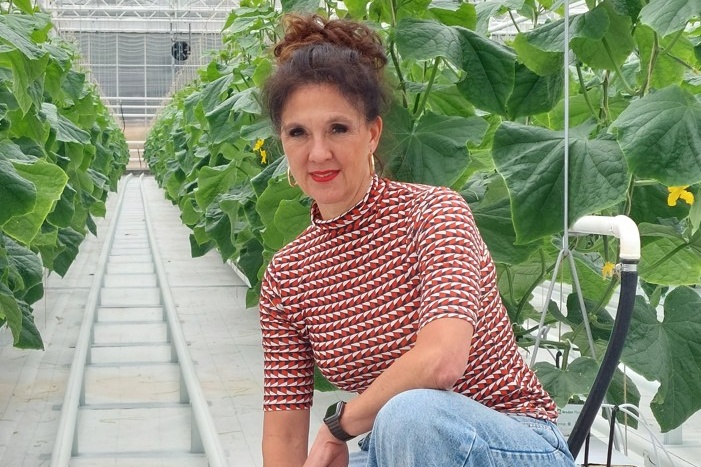
Risky trends in the French greenhouse industry: “Insurance is more than just payouts”

Risky trends in the French greenhouse industry: “Insurance is more than just payouts”

The French greenhouse industry is concentrated in three main areas: Brittany, which spans around 450 hectares; the region near Perpignan and Provence, with approximately 350 hectares; and Loire-Atlantiques, which has about 250 hectares. Elsewhere in France, greenhouses are found in smaller, less…

Risky trends in the French greenhouse industry: “Insurance is more than just payouts” Read More »