News Articles

Stay updated with the latest developments and discoveries in the world of plants and horticulture with our News Articles category. Here, you’ll find timely updates on conservation efforts, botanical breakthroughs, gardening trends, and industry news. Whether it’s a new species discovery, tips for sustainable gardening, or global botanical initiatives, this section keeps you informed and connected to the ever-evolving plant world. Perfect for enthusiasts, researchers, and nature lovers looking to stay in the know.

Seeking advice! Me ( a soft Permie) has been hired by one of Australia’s most hardcore intellectual Permies (Rosemary Morrow). The challenge; to assist in the archiving and storing of 40 years of resources and knowledge.

Seeking advice! Me ( a soft Permie) has been hired by one of Australia's most hardcore intellectual Permies (Rosemary Morrow). The challenge; to assist in the archiving and storing of 40 years of resources and knowledge.

My question is what is the most important information you want to know (and is worth storing) from one of Australia’s leading Permaculture icons.

About Rosemary Morrow

  • Most focused on teaching Permaculture to refugees all around the world
  • Books: Earth restorer’s guide to Permaculture (older versions called earth user’s guide…), the family seed saving book, Permaculture teaching matters,
  • traveled to around 50 different countries and has had crazy things like kidnappings and the such but still is always supporting people and the land with incredible teaching. (wild story to hear how she narrowly escaped the Khmer Rouge by chance)
  • has an academic understanding of Permaculture and landscape design beyond anyone I have ever met in my life.
  • Casually doing zoom calls to minorities in very dangerous places to teach them.
  • One of the most inspiring people; so peace focused it’s like she’s on fire.

What do you folks as the broader community want most from her as we enter the Climatic Era?

  • Working to your biggest limiting factors what questions do you have for the future of yourself your community and your land?
  • What form of content is best for you? Do you like academic writing or are you like me and needing “spoon feeding” on basic concepts?
  • It’s going to be difficult because I think she will be famous for her design in 2-3 hundred years but naturally understanding the genius is not common because of our (current) stable climate.

My questions:

  • Does anyone know any Permaculture knowledge storing hubs or institutions? Perhaps libraries that are Permaculture friendly and would appreciate the content?
  • What are your beliefs about the best way to preserve someone’s life and ideas?: biography? trust fund? spooky weird AI replica? museum? reddit post? let the work speak for itself?….

submitted by /u/woollydog
[link] [comments]

Read More »

Nematodes for Fleas

Nematodes for Fleas

I’ve ordered some “NemaSeek™ – Hb Beneficial Nematodes”. Has anyone used tried nematodes? What I want to happen is to build up a healthy level of these nematodes in the soil making my soil resilient to fleas. What does happen I have been finding mixed information. Some things say you need to reapply at spring etc.

Has anyone had luck in creating a long term unwelcome environment for fleas?

submitted by /u/Denomi0
[link] [comments]

Nematodes for Fleas Read More »

“To achieve the best results from research, tailor-made lighting is essential”

"To achieve the best results from research, tailor-made lighting is essential"

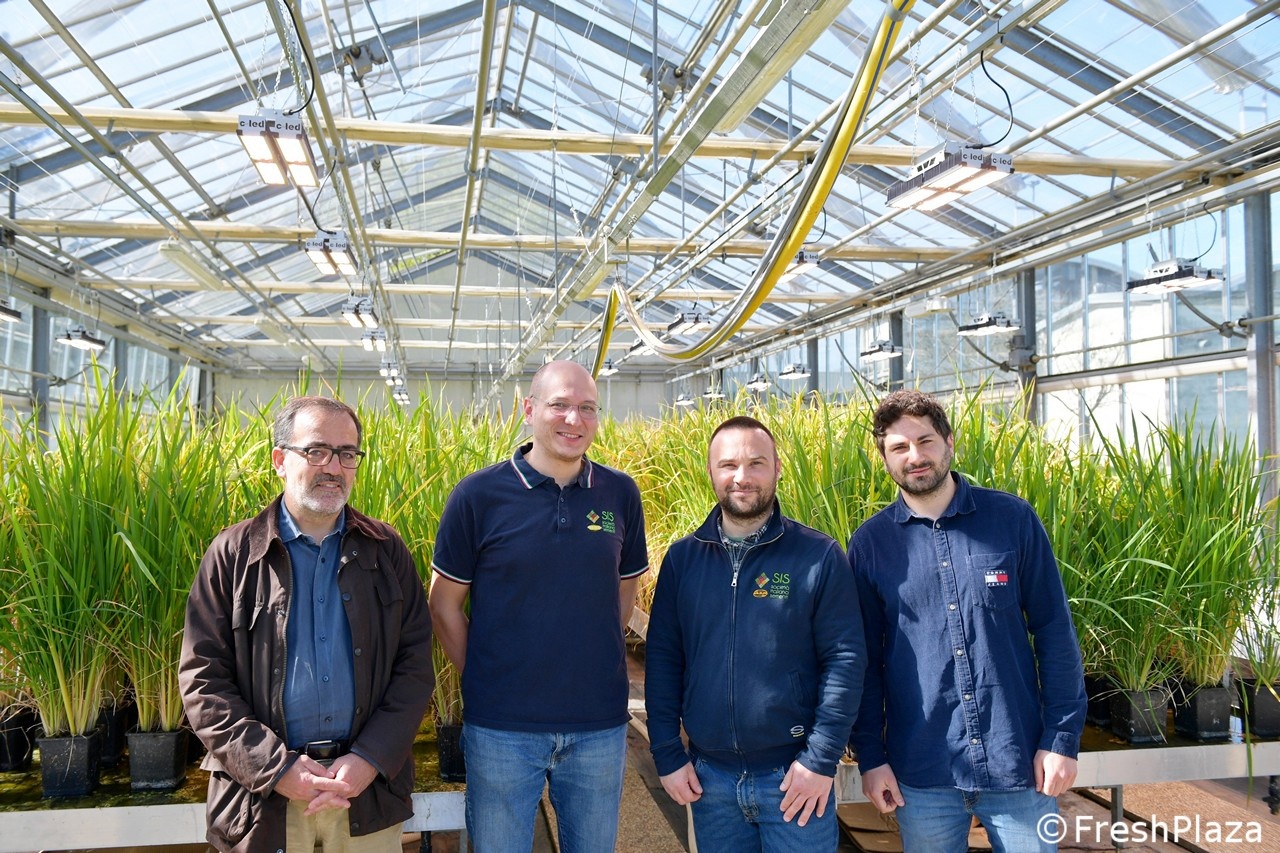
The Italian company C-Led continues its partnerships with prominent Italian companies and research institutions. One of the most recent partnerships is with SIS (Società Italiana Sementi), based in the province of Bologna. “It is a source of great pride for us at C-Led to collaborate with a historic and…

Read More »

Wool as a roofing material?

Wool as a roofing material?

I was watching this video of a Romanian Permaculture project, and around 9:04, the guy uses wool as a roofing material.

The roofing process is metal fencing, canvas tarp, wool, plastic, wool and the last layer seems exposed to the open air.

I’ve been watching his videos for years, and he has never said anything bad about it.

Has anyone ever heard of this? And if it works, why does it work?

submitted by /u/PuzzleheadedBig4606
[link] [comments]

Wool as a roofing material? Read More »

hugelkulktur in high rain and humidity areas

hugelkulktur in high rain and humidity areas

Hi! I would like some help planning some raised beds for my garden. I’ve seen on this subreddit that hugelkultur mounds don’t tend to work well in areas with high annual rainfall, including mine with over 50 inches of rain annually, but I have two problems. For one, I have a condition I will not name but essentially, I faint if I bend over more than 130-ish degrees. I can crouch with a sort of… slav squat, for lack of better phrasing, or get on my knees, but it’s painful and only useful for short periods of time. Two, the soil in my backyard is totally unusable. It’s red clay with ZERO drainage (our basement floods in every storm), and it is hard as a rock unless it is actively raining. Then, at best, it turns into a sort of sludgy oobleck that is the bane of vehicles and pedestrians alike. Yay.

My question is, is there any way to amend hugelkultur to work in my hot, wet climate? There’s always fallen logs in my area, so it’s likely the only way I can make a large garden outside of my kind of pathetic collection of pots that will work for me, at least without spending a few sad years saving up for pre-manufactured beds or building one myself. It’s zone 8a, but summer temperatures have been hitting record highs in the 90s and 100s and show no signs of slowing down. My first idea was instead of using large logs ascending up to smaller pieces of wood, to just use layers of smaller pieces from easily rotting species that are more likely to rot instead of petrify. I could also inoculate the wood with mushrooms, as a lot of tasty edibles grow like crazy in my area.

I’m interested in growing pretty much all kitchen herbs, cucumbers, peppers, tomatoes, nasturtiums, lettuces, arugula, melons, sugar pumpkins and other gourds, ocas, potatoes, walking onions, non-walking onions, blueberries, and finally, some wild edibles native to my area (red deadnettle, grape hyacinths, and wild violets are super common here). I also just love gardening, and I love trying out new varieties, so I’m happy to take suggestions. Especially weird or uncommon ones!

The beds are going to be keyhole or L -shaped to maximize the 15 foot wide by 25 foot long space, and have to be at least 3-4 feet tall. They could be taller if I could build stairs into them somehow, because whatever you believe in knows there is absolutely no shortage of lumber in the entire state. I also don’t want to have to add water to these beds often if at all, but honestly, I don’t think that would be very challenging. It’s difficult enough to keep most plants here from being essentially waterboarded.

If this isn’t possible I understand, and I would really appreciate other suggestions to make affordable beds out of the same space. I fell in love with gardening in an area that is beginning to feel like it’s actively spiting me, so I’ll take anything that will let me keep growing in the small space I have and set up something that lasts. My family’s low income, so I want to try and give them some small sense of abundance. If you know anything that would help, I would greatly appreciate it!

submitted by /u/ch3rryb0mb1999
[link] [comments]

hugelkulktur in high rain and humidity areas Read More »

How Do Permaculture Farms Handle Mineral Depletion if Produce Is Sold Off?

How Do Permaculture Farms Handle Mineral Depletion if Produce Is Sold Off?

Hi everyone! I’m quite new to the concept of permaculture and have been reading up on its principles with great interest. One question that keeps popping up in my mind is about nutrient cycles on a permaculture farm — especially when fruits or vegetables are harvested and sold off the farm.

If the produce (which contains minerals) is being exported regularly for sale, wouldn’t that gradually lead to mineral depletion in the soil over time, unless those minerals are somehow brought back in? I do understand that nitrogen can be fixed from the atmosphere through certain bacteria and legumes, but most other essential minerals — like potassium, phosphorus, magnesium, etc. — aren’t atmospheric and would need to come from somewhere, right?

For those of you who are running a permaculture setup over a longer period, do you find the need to periodically add any form of natural or organic fertilizers to maintain nutrient balance? Or are there techniques you use that keep the mineral cycle closed even with produce being sold?

Also, this brings me to a broader question: Is permaculture primarily meant to be a self-sustaining system for personal use, or have some of you been able to turn it into a small-scale commercial setup for side income — without compromising its core principles?

Looking forward to learning from your experiences and insights! 😊

submitted by /u/stephaniemulder
[link] [comments]

How Do Permaculture Farms Handle Mineral Depletion if Produce Is Sold Off? Read More »

help understanding mojave yucca care!

help understanding mojave yucca care!

hi!

i recently moved to a house in joshua tree that sits on a 1/2 acre plot. it’s a long story, but essentially the former tenant tried to purposely destroy the property, and thus did not leave the state of the yard in the best of conditions. i have been cleaning it up—getting rid of tons of broken glass, cigarette butts, rusted metal pieces, etc. i do not, however, have any experience caring for plants in the desert and my goal is to learn much in the coming weeks. i googled some preliminary information, but wanted to come here for some specific questions about one of our mojave yuccas (i think?) that lives in the back corner of the land.

i’ve attached photos of the yucca for reference; i just want to know how i can proceed in caring for the plant, that would lead to the best outcome. should i cut off all of the dead and dried-up arms? should i remove the inner yuccas entirely as it seems the living are growing around the dead? or, can the dead be revived & revitalized?

thank you in advance for your help & please let me know if any additional photos would be of assistance!

c🌵🌞

submitted by /u/itscamillexx
[link] [comments]

help understanding mojave yucca care! Read More »

Experiences with capsaicin sprays to deter rodents.

Experiences with capsaicin sprays to deter rodents.

Hi all, currently working with my dad to turn an old farmhouse into a little permaculture retirement residence. Everything is going great except for one glaring issue, rodents. The block is parked between mixed use grain/orchard farms and despite our best efforts the house is unoccupied 60% of the time. We’re southern hemisphere so winter is starting to hit and all the rodents are looking for a warmer place to find a home. Every time either of us comes down the first hour is spent cleaning up after the rodents that are finding a comfy place to rest in the house and it’s a pretty grim way to find your happy place.

All food is locked in sealed containers, has been for over a year, that isn’t the issue, any fruit bearing tree/vegetable is also 50-100m from the house, the cottage garden is clean and open. The only explanation is that the shelter itself is attractive. We’ve plans for laying a slab, sealing all gaps under the house, etc. but in the meantime we need some relief.

Does anyone have experience making a capsaicin extract to deter pests? Formula, application tips, we’re desperate. We’ve tried peppermint oil and all the gentle options (we’ve had native species around the house but they took off once the house was somewhat regularly inhabited), the rat bastards have shat in our tea cups and it needs to end.

Additionally my dad was an industrial chemist, if anyone has a potent concoction to guarantee success he’s the man to take it nuclear.

submitted by /u/ArmadilloReasonable9
[link] [comments]

Experiences with capsaicin sprays to deter rodents. Read More »