
Mix strawberry or wild strawberry?
Trying to figure out if this is mock strawberry or wild strawberry… what do y’all think? Zone 8a
submitted by /u/sundaygir99
[link] [comments]
Mix strawberry or wild strawberry? Read More »
Stay updated with the latest developments and discoveries in the world of plants and horticulture with our News Articles category. Here, you’ll find timely updates on conservation efforts, botanical breakthroughs, gardening trends, and industry news. Whether it’s a new species discovery, tips for sustainable gardening, or global botanical initiatives, this section keeps you informed and connected to the ever-evolving plant world. Perfect for enthusiasts, researchers, and nature lovers looking to stay in the know.
Trying to figure out if this is mock strawberry or wild strawberry… what do y’all think? Zone 8a
submitted by /u/sundaygir99
[link] [comments]
Mix strawberry or wild strawberry? Read More »
The Rocky Mountain Guide: Plants That Thrive is an educational resource on plant varieties that perform well in the region.
The post Introducing the New ‘Rocky Mountain Guide: Plants That Thrive’ appeared first on Greenhouse Grower.
Introducing the New ‘Rocky Mountain Guide: Plants That Thrive’ Read More »
Just curious but does anyone have any creative ideas for uses of the actual vine other than growing the muscadines themselves. The one thing I admire about many indigenous cultures, more so in the context before the Industrial Revolution is about the most roundabout period in history I can think of, is how humans lived in “communion” with nature. I do not think my wording of this point is super clear so please forgive me for this all being a bit confusing. Anyhow, does anyone have any ideas other than firewood after the wood is dried?
submitted by /u/Active_Leg_1878
[link] [comments]
Other uses for muscadine vines Read More »

Guardian Australia is highlighting the plight of our endangered native species during an election campaign that is ignoring broken environment laws and rapidly declining ecosystems
Hundreds of far eastern curlews fly non-stop more than 10,000km every year to Darwin Harbour from Russia and China. But their southern habitat is under threat from a large industrial development backed by more than $1bn in federal government funding.
Known for its long curved bill and soft brown feathers, the far eastern curlew is the world’s largest migratory shorebird and one of 22 priority bird species the Albanese government has promised to support. The birds fly south each year to forage, rest and fatten up during summer before returning to the northern hemisphere.
Get Guardian Australia environment editor Adam Morton’s Clear Air column as an email

Nature will reclaim its place as a terrifying quasi-divine force that cannot be mastered. I find this strangely comforting
At times my work takes me to the big city and the tall buildings where people with power make decisions that affect the rest of us. While I am there, crossing busy roads, wearing tidy clothes and carrying out my duty, I think of faraway places where life is getting on without me.
Logrunners are turning leaf litter on the rainforest floor, albatross are cruising the wind beyond sight of the coast. Why does thinking about these creatures, who have no idea that I exist, bring me such comfort?
Get Guardian Australia environment editor Adam Morton’s Clear Air column as an email
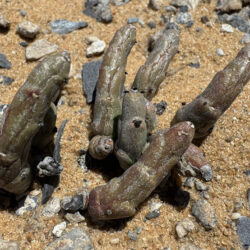
Euphorbia stapelioides is a dwarf succulent with an underground tuber and several fleshy, spineless branches that may be cylindrical or …
The post Euphorbia stapelioides appeared first on World of Succulents.
Please click “Continue Reading” for a more detailed description, scientific and common names, scientific classification, origin and habitat, care tips, and photos!
Euphorbia stapelioides Read More »

By learning to live with its ursine neighbours, mountainous Pettorano sul Gizio has drawn tourists and new residents, bucking a trend of rural decline
Pettorano sul Gizio is a medieval mountain town full of alleys, watchful cats and wooden doors locked sometime in the last century. In the lower parts of town, rustic charm turns into abandonment – branches grow out of walls and roofs have fallen in. The only bar closed at Christmas, after the owner died. Some “For Sale” signs have been up so long the phone number is illegible.
The town, with its faded ochre and orange hues, is listed as one of Italy’s I Borghi più belli (an association of historic towns). In 1920, about 5,000 people lived here, now the population is 390. It resembles many others in Italy’s south-central Abruzzo region, home to a shrinking, ageing population. One nearby town has been almost completely abandoned, and is home to just 12 people.
‘We made everything bear-proof’: the Italian village that learned to love its bears Read More »
Here’s how Don and Teri Lavocat overcame challenges to grww a small, family greenhouse business into a thriving, multi-generational operation.
The post Lavocat’s Family Greenhouse and Nursery: How To Turn Obstacles Into Success appeared first on Greenhouse Grower.
Lavocat’s Family Greenhouse and Nursery: How To Turn Obstacles Into Success Read More »

Guardian Australia is highlighting the plight of our endangered native species during an election campaign that is ignoring broken environment laws and rapidly declining ecosystems
Less than a lifetime ago, great flocks of Carnaby’s cockatoos cast large shadows over Perth. Now, the long-term clearing of eucalypt forests and banksia woodlands, combined with southern Western Australia’s driest and hottest period on record, is pushing the species towards extinction. Scientists say little is being done to reverse the decline.
Peter Mawson, a research associate at Western Australia’s biodiversity department, is old enough to remember a time when the birds were a common sight. “Sometimes, I see people make comments on social media that they’ve seen a flock of 100 Carnaby’s cockatoos and they’re really chuffed at that, because normally you see them in 10s or 20s,” he said. “But when I was a small boy collecting firewood with my father not far from where I grew up it was not uncommon to see flocks of 3,000 to 5,000 birds fly overhead.
Get Guardian Australia environment editor Adam Morton’s Clear Air column as an email