News Articles

Stay updated with the latest developments and discoveries in the world of plants and horticulture with our News Articles category. Here, you’ll find timely updates on conservation efforts, botanical breakthroughs, gardening trends, and industry news. Whether it’s a new species discovery, tips for sustainable gardening, or global botanical initiatives, this section keeps you informed and connected to the ever-evolving plant world. Perfect for enthusiasts, researchers, and nature lovers looking to stay in the know.

Promoting cacao production without sacrificing biodiversity

The productivity of cacao trees decreases with time, forcing farmers to renew their plantations by either cutting down the old trees or establishing a new crop elsewhere. Frequently, new plantations are established in areas of the forest that are thinned out to accommodate new, young cacao trees. However, this comes with high economic and ecological costs. An alternative approach is to graft highly productive and native cultivars onto the existing older cacao trees. An international team found that cacao grafting is a useful measure to rejuvenate cacao plants, increasing their yield and profits with minimal impact on biodiversity.

Promoting cacao production without sacrificing biodiversity Read More »

Promoting cacao production without sacrificing biodiversity

The productivity of cacao trees decreases with time, forcing farmers to renew their plantations by either cutting down the old trees or establishing a new crop elsewhere. Frequently, new plantations are established in areas of the forest that are thinned out to accommodate new, young cacao trees. However, this comes with high economic and ecological costs. An alternative approach is to graft highly productive and native cultivars onto the existing older cacao trees. An international team found that cacao grafting is a useful measure to rejuvenate cacao plants, increasing their yield and profits with minimal impact on biodiversity.

Promoting cacao production without sacrificing biodiversity Read More »

Assessment of the nutritional and effluent properties of potential fish-meal-free diets for rainbow trout (Oncorhynchus mykiss W.) in Iran

Abstract

Research is needed on alternative ingredients for aquafeeds due to rising demand and limited fish meal availability. This study evaluated fish-meal–free diets for rainbow trout in two phases. The first phase focused on assessing the growth performance and nutrient digestibility of six cold-pelleted diets. Aside from the control diet, the test diets contained poultry protein concentrate, blood meal, low-ash poultry by-product meal, 20–40% canola meal, and feather meal (Goldmehl®). Juvenile fish, averaging 5.3 g, were fed the diets for 56 days in a random-block design with four replicates per feed. Feces were collected using the settling method to evaluate nutritional digestibility and phosphorus availability. The feed from the primary phase, which resulted in the least-cost feed conversion ratio, was extruded and fed to fingerlings (14.6 g) in the second phase. This trial added to the first run in measuring digestibility parameters over a 28-day period. In parallel, extruded feed was given to grow-out fish, averaging 172.5 g, for 55 days in triplicate completely randomized tanks to evaluate growth performance and nutrient effluents. Throughout all the experimental runs, a casein-based laboratory pelleted feed was used for the respective controls. Feeding rainbow trout with 35% canola meal in both pelleted and extruded forms showed comparable results (P > 0.05) to the control in terms of growth performance and apparent digestibility for lipid (> 91%), crude protein (> 87%), and organic matter (> 78%). The extruded feed in this study represents an eco-friendly option for the growing aquafeed sector. 

Assessment of the nutritional and effluent properties of potential fish-meal-free diets for rainbow trout (Oncorhynchus mykiss W.) in Iran Read More »

Gardens Under Glass

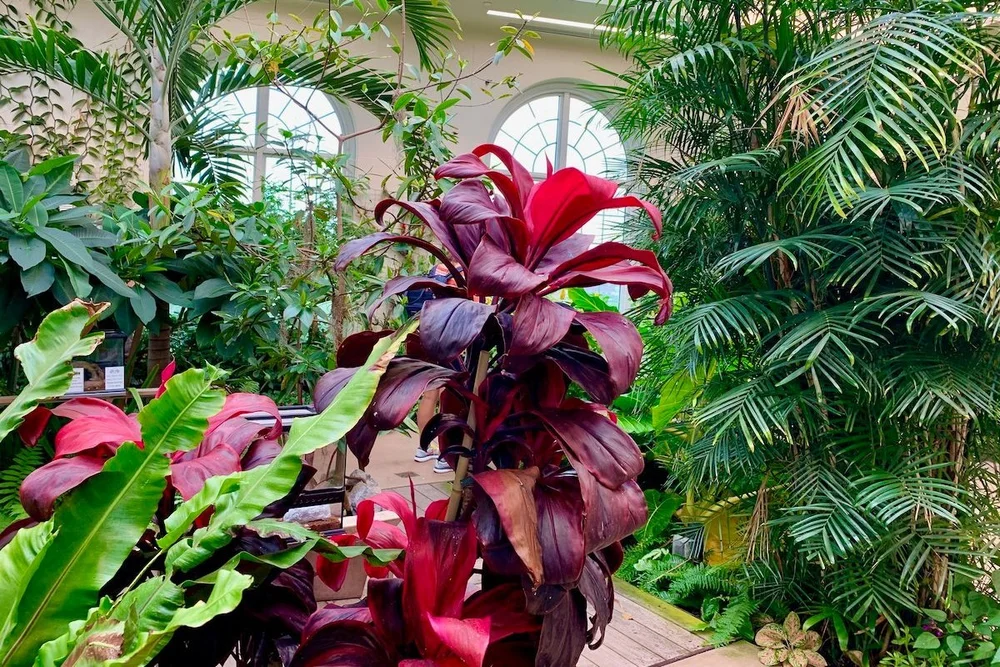
January and February are the toughest months for gardeners with snow, ice and bitter, cold winds making forays into the garden unpleasant. An afternoon spent in a warm, lushly planted greenhouse is a welcome respite from our Northeast winter. So call one of your gardening friends and make a date to visit one of our local gardens under glass.

courtesy of wellesley college

Wellesley College Global Flora Conservatory

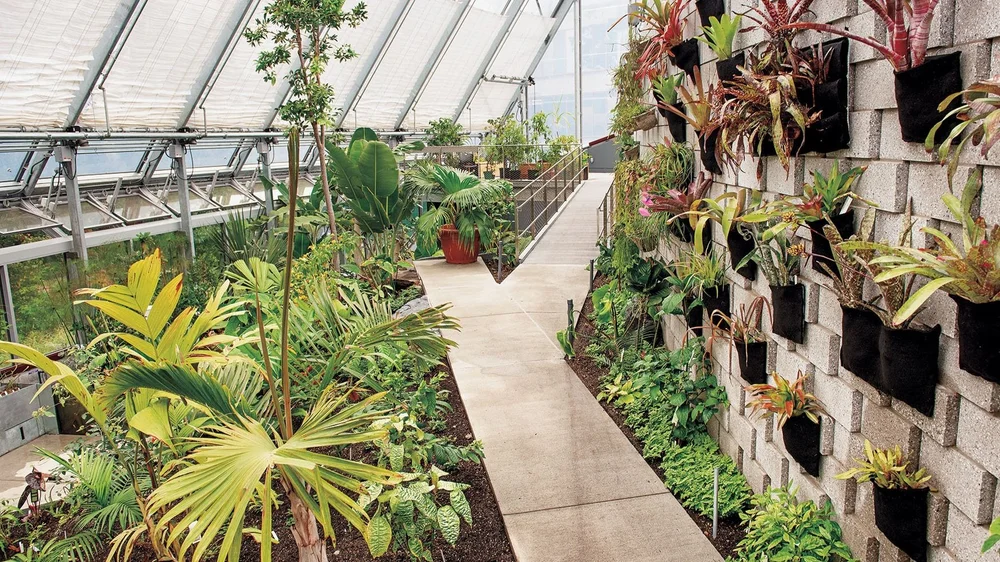
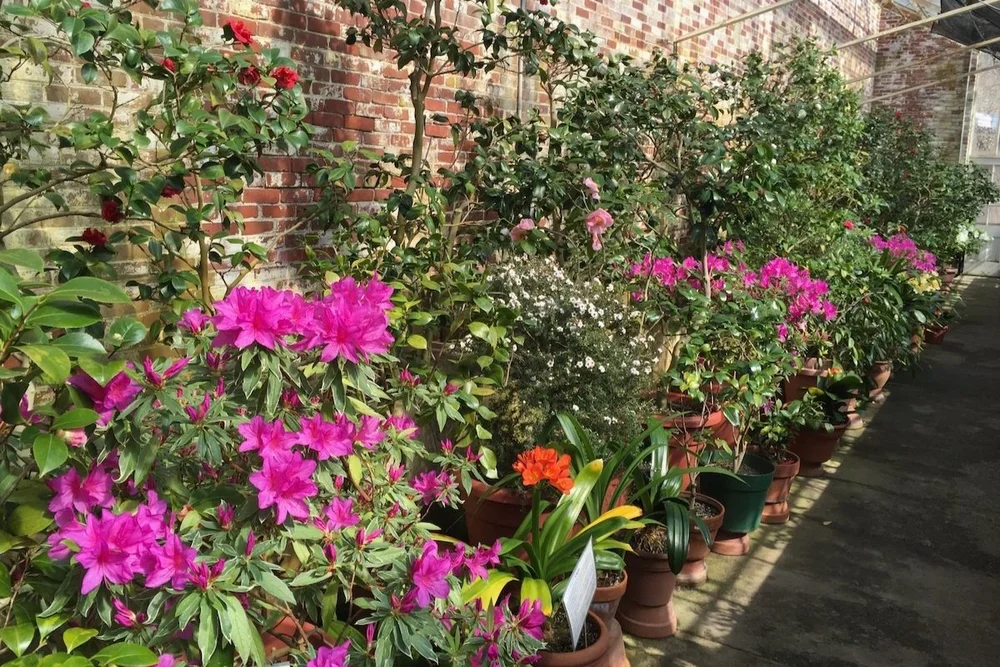
The Global Flora conservatory at Wellesley College is a part of the Wellesley College Botanic Garden. This new conservatory was built in 2019, and houses plants from every continent except Antarctica. Global Flora includes three sections: the Camellia Pavilion, the Dry Biome, which includes plants adapted to desert and dry climates around the world, and the Wet Biome, for plants from subtropical humid regions. (wellesley.edu/about-us/offices-departments/wellesley-college-botanic-gardens)

Roger Williams Park Botanical Center

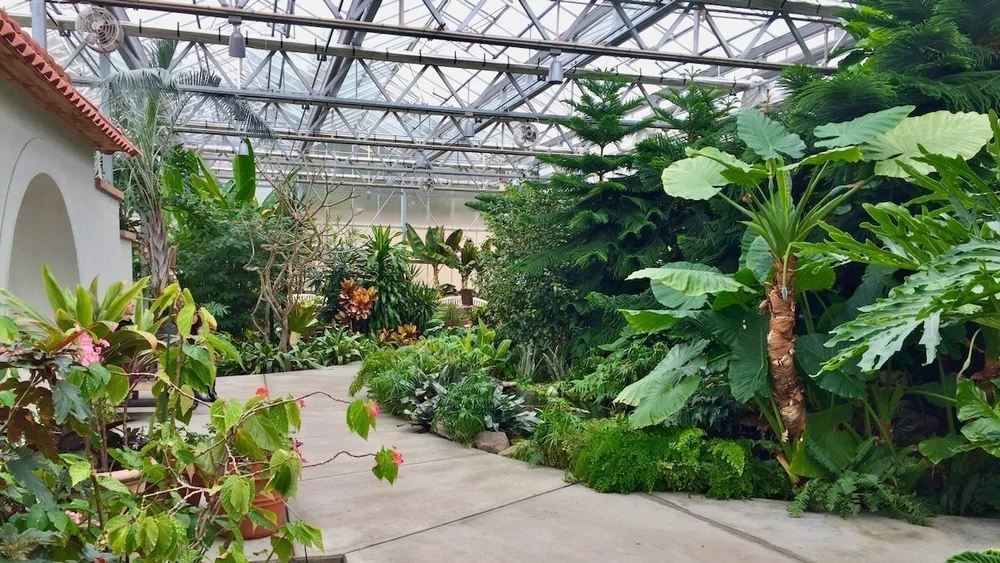
The Botanical Center opened in 2007, and at 12,000 square feet is the largest public indoor display garden in New England. It includes two main greenhouses: The Conservatory and the Mediterranean Room. The Conservatory has the feeling of a large courtyard surrounded by elegant tall palms. A fountain bubbles and colorful tropical plants bloom beneath stately trees. Immense birds of paradise hide among the palms, like storks in the jungle. The Mediterranean Room is built around a long stucco wall with a circular gate. A densely planted pond with giant koi dominates the room. A small waterfall and a Mediterranean fountain provide soothing background music. All in all, there are over 150 different species and cultivars of plants including 17 types of palms. (providenceri.gov/botanical-center)

Lyman Conservatory at Smith College

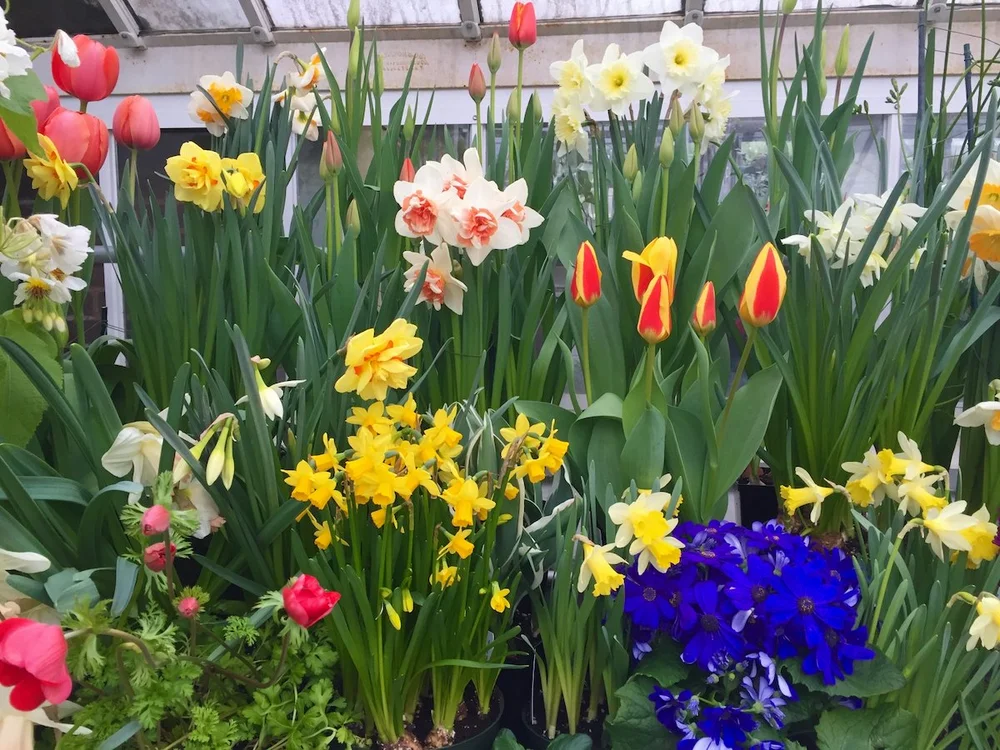
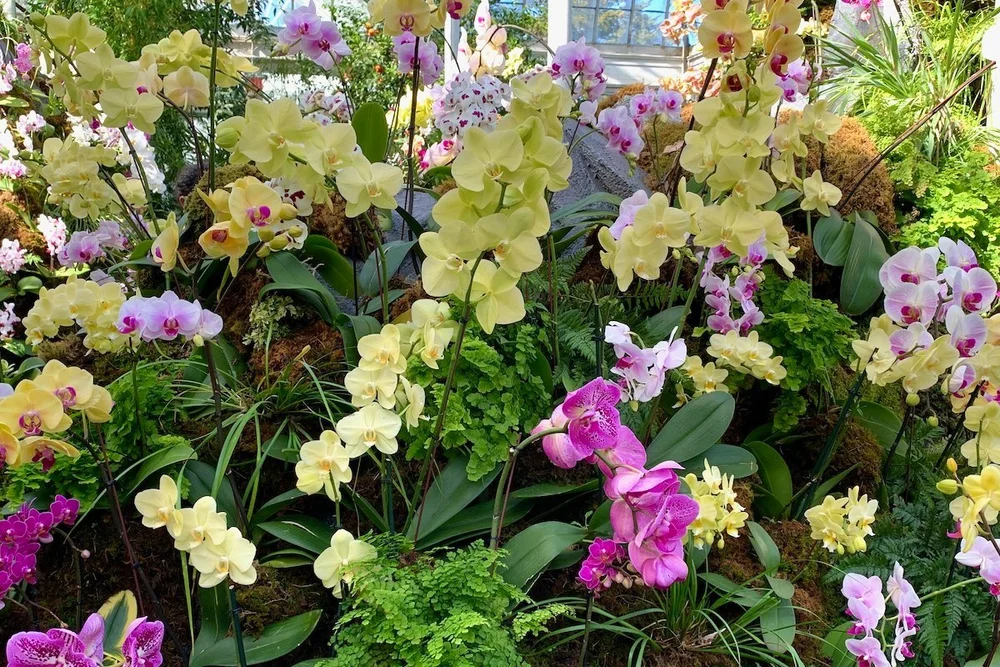
The Lyman Conservatory at Smith College houses over 3,000 species of tropical, subtropical, and desert plants in Lord & Burnham greenhouses. A Camellia Corridor leads to the Palm House where a titan arum opens its gigantic flower every three to five years. The Fern House features a Wardian case and New Zealand tree ferns towering above dozens of fern species. Carnivorous plants bask in the Warm Temperate House. Many varieties of orchids share the Stove House with water lilies, papyrus, sugar cane, and bromeliads. The Spring Bulb Show is a delight in March. (garden.smith.edu)

Briggs Garden and Home

Briggs Garden and Home is a family-owned and operated nursery dating to 1961, when the business began as a landscape design and build company. Today the nursery has one of the largest greenhouses in the area, stocked with tropicals, citrus trees, herbs, and baskets overflowing with gorgeous annuals. The retail store is beautifully designed and staged, with a huge selection of garden necessities, ornaments and accessories. There are candles, glass balls, ceramic fish, birdhouses, and elegant glass containers for the terrariums. A charming café allows you to linger over a cappuccino or fruit smoothie and indulge in a sandwich or pastry. (briggsgarden.com)

New England Botanic Garden

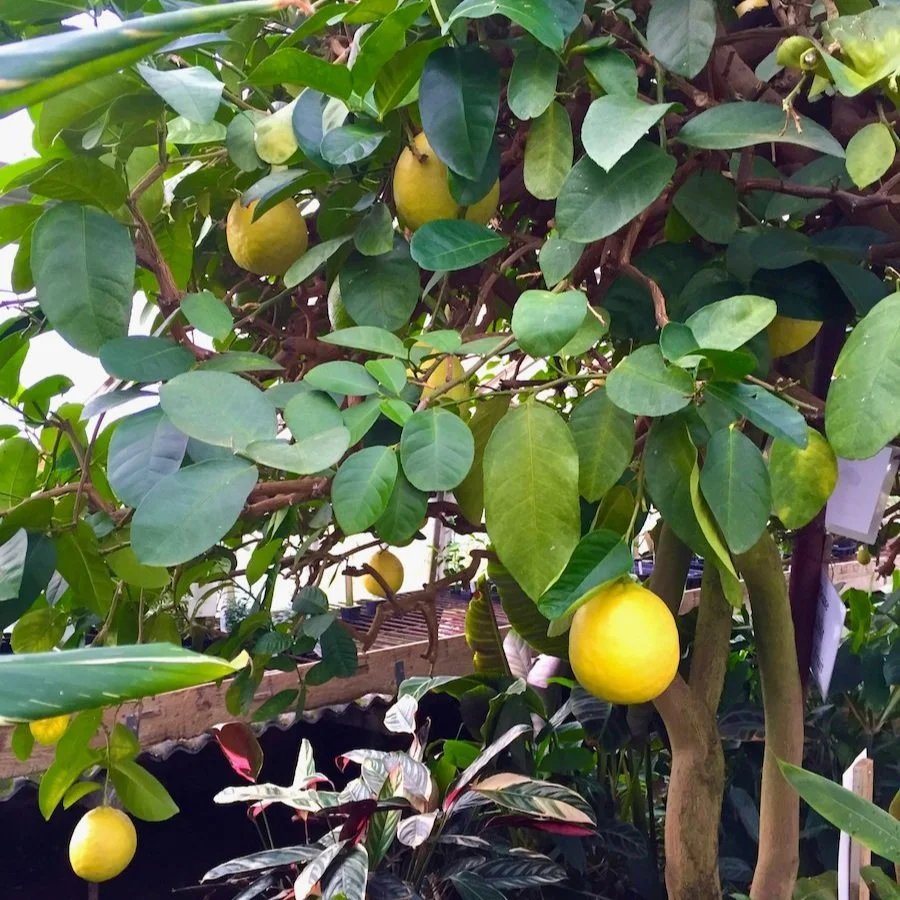
New England Botanic Garden’s Orangerie and Limonaia conservatories showcase beautiful collections of subtropical plants, camellias, and citrus trees. The Orangerie is a charming 18th century style greenhouse with potted plants arranged in artful combinations of complementary foliage color, texture and bloom. Statuary, seating nooks, fountains with trickling water and the scents of many blossoms add to its magical charm. The Limonaia – Italian for “Lemon House” – features lemon trees with fruits in many forms and colors, from the school-bus yellow Meyer lemons to the soft-ball sized Ponderosas. Mingling with the lemon trees are camellias, ferns, bougainvillea and forced narcissus. It’s a feast for the senses. (nebg.org)

Isabella Stewart Gardner Museum

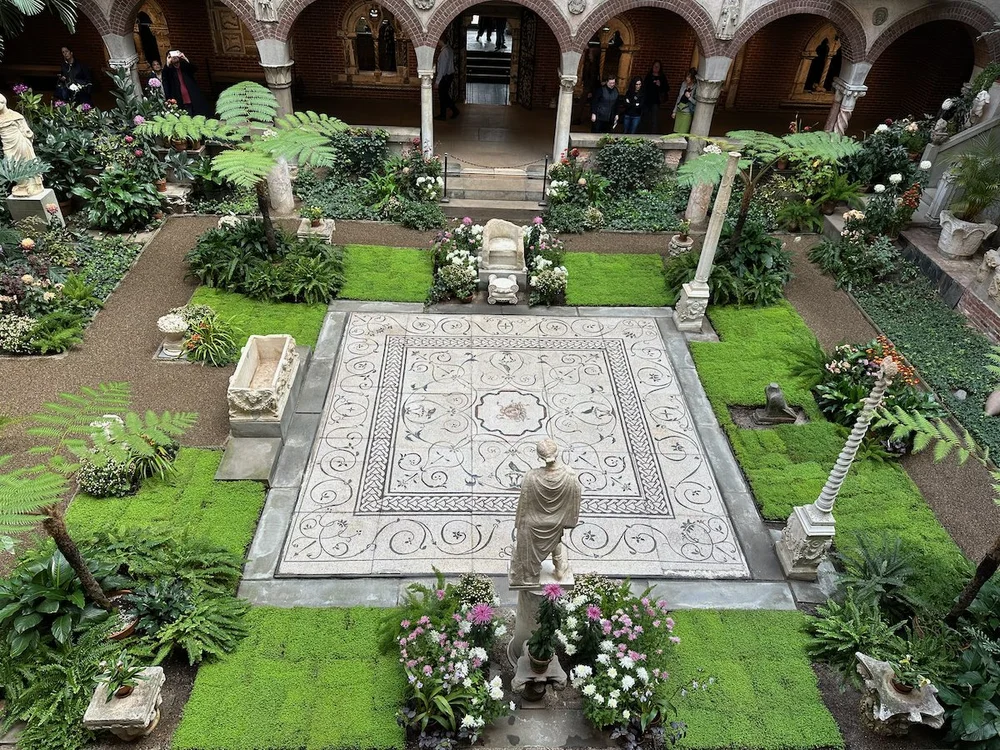
The exquisite courtyard garden of Boston’s Isabella Stewart Gardner Museum complements the architecture and artwork of this grand historic mansion. Known for its spring nasturtium display, this indoor city garden is a haven in all seasons. From January to February, masses of tropical plants fill the courtyard with many of shades of green, complemented by clouds of white blossoms on mature jade plants. Norfolk Island pines, tree ferns, begonias and a variety of palms create a green tapestry, while orange and yellow bromeliads, striped Draceaena and colorful crotons provide splashes of color. In late February through March, the courtyard overflows with weeping yellow jasmines and dozens of orchids: lady’s slippers, Moth Orchids, Cattleya, Oncidius, and Cymbidiums. (www.gardnermuseum.org)

Lyman Estate

Orchid and camellia lovers should also visit the Lyman Estate in Waltham, which features one of the oldest surviving greenhouse complexes in the country.  A grape house dates back to 1804, a camellia house to 1820, and an orchid house to 1840. The 100 year-old camellia trees are the stars of the Lyman Estate. Related to Camellia sinensis, which is the plant that tea comes from, Camellia japonica is a small ornamental tree valued for its beautiful, rose-like flowers. There are more than 2,000 varieties of Camellia japonica in existence, with colors ranging from white to pale pink to red, and blossoms that may be striped or speckled, and single or double in form. Visit the Lyman Estate and celebrate their camellia blooming season from early February to early March. (www.historicnewengland.org)

Logee’s Greenhouses

A listing of gardens under glass would not be complete without mentioning Logee’s Greenhouses, a destination greenhouse for avid gardeners in Danielson, Conn. In 1900, founder William D. Logee bought a small Ponderosa Lemon tree from a grower in Philadelphia. It was know as the “American Wonder Lemon” because the fruit could get as large as five pounds. Planted in the original greenhouse on the property, the same tree still stands today and is reliably producing five-pound lemons every year. Thousands of lemon trees have been propagated from this original plant. Logee’s Greenhouses is renowned for its collection of tropical and exotic plants including a large selection of passion flowers, Angel’s Trumpets, orchids, begonias, jasmines, and of course, citrus trees. (www.logees.com)

New York Botanical Garden

The New York Botanical Garden is a destination year-round. Its Lord & Burnham Conservatory is a remarkable example of Victorian-style glasshouse artistry. It is home to lush tropical rain forests, cactus-filled deserts, orchids, palms, aquatic and carnivorous plants, and seasonal displays. Of special note is the annual Orchid Show, which begins in March. Designed with a different theme each year, it features thousands of gorgeous orchids in unique displays. (nybg.org)

Longwood Gardens

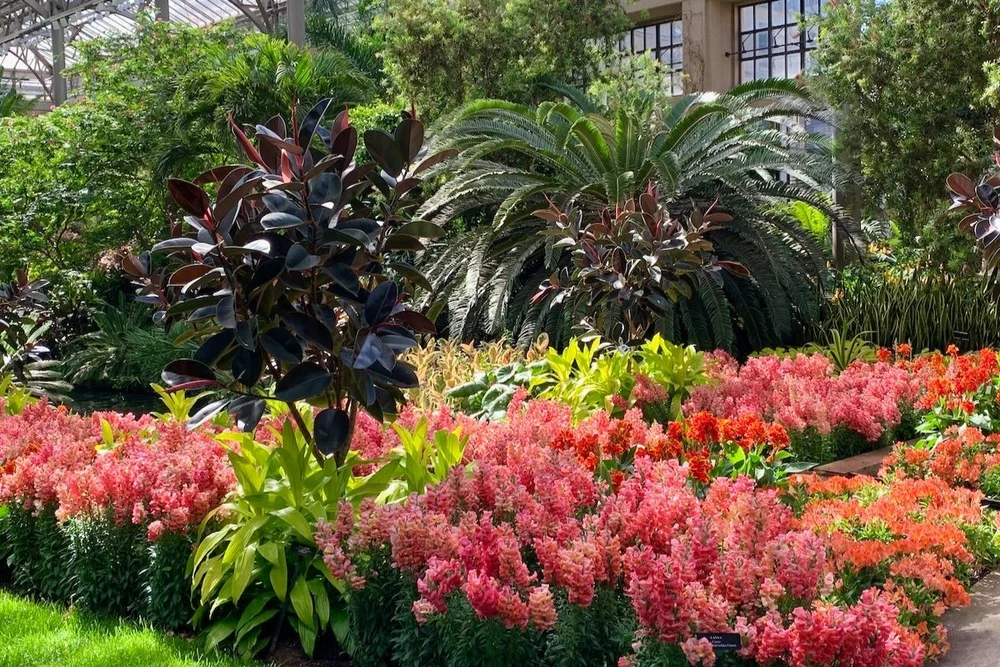
The indoor garden spaces at Longwood Gardens cover more than 10 acre of amazing displays throughout the seasons. The Historic Main Conservatory is a place of perpetual bloom and elegant beauty. Stroll past green lawns, mature trees and sunken pools, surrounded by lush floral displays and massive hanging baskets of flowers. There is a whimsical indoor children’s garden, an Orchid House, a historic ballroom and organ room. The new Longwood Reimagined complex features the Roberto Marx Burle Cascade Garden and the modern West Conservatory with its Mediterranean-inspired landscape. (longwoodgardens.org/gardens)

Hershey Gardens

The Hershey Gardens Butterfly Atrium in the conservatory is a year-round attraction, with hundreds of North American and tropical butterflies fluttering through a tropical oasis. Palm trees, ti plants, hibiscus, and even the cacao tree that is used to make chocolate create a beautiful setting for leopard lacewings, Great Mormons, blue morphos, and many other butterflies and moths. A large Chrysalis Cabinet illustrates the butterfly lifecycle from egg to caterpillar, pupa, and adult. (hersheygardens.org)

A visit to one of these wonderful greenhouses will lift your spirits, fuel your creativity and make the winter seem a little shorter.


You might also like:

Gardens Under Glass Read More »

Building with natural material for a homestead in the upper Midwest?


Hello yall me and my wife will be buying some land within the next 5 years in the upper Midwest/superior highland. (northern Minnesota, three northern counties in Wisconsin, Marquette Michigan) we want to build with natural materials and have a homestead. My only problem is, is that it seems the most suitable for that area will be straw bale construction, it seems though, if going that route you have to have some square walls, I have worked in construction for over 10 years and have come to the conclusion that I fucking hate 90° degree corners and would rather rounded walls. Are there ways to not have a stereotypical looking house while still builidng with natural materials in the superior upland region? We would have to prepare for a lot of snow and fluctuations in tempature seasonally (thankfully it stays humid enough where you don’t have to deal with the tempature swings of the southwest) i figured asking this sub sense it’s the most active and the natural building sub isn’t at all active

submitted by /u/mrbossy
[link] [comments]

Building with natural material for a homestead in the upper Midwest? Read More »

January Garden

 Sunny, dry, cold. That is January in a nutshell this year. Unseasonably dry I might add. If we do not receive any precipitation by the 31st then it will be yet another record; this one for the most consecutive dry days in January. While the mountain snowpack has decreased a little this month, we had a precipitation surplus going into January and hopefully next month will make up for any losses. The sunshine has been welcome, however, a false spring of sorts save for the sub-freezing temperatures at night. We have been out nearly every day tackling chores such as pruning the orchard, sowing onion seeds in the greenhouse as well as giving the greenhouse a really good clean out. Blackberry removal is good in dry weather so that’s been happening. All in all, rather lovely to be outside.
January is certainly not a glamorous month for the garden but there is some interest out there. With the sun at a low angle I’m squinting all the time and holding my arm across my eyes as I navigate the property and survey bird activity. There is plenty of that right now, and the birds seem to be enjoying the respite from typically very wet weather. That low light shining through dried plants, grasses and seeds can be kind of pretty. So this is what the garden looks like this January, all dressed down in muted colors, dried grasses and crazy intense sunshine. I suppose in a regular wet January much of this plant material would be flat on the ground; this is clearly not a regular wet January.
The main hang out of the birds, the meadow area where they forage on the ground and find shelter. I often see plants moving all on their own (paranormal grasses?) paired with the telltale “weeeep” of towhees or chirp of sparrows.
In the labyrinth garden looking towards the house. Lupinus albifrons getting larger every month. I might have underestimated its ultimate size. Behind it, Yucca rostrata, a rescue from years ago, is finally settling in and will too grow rather large. Hebes, Acca sellowiana and Olearia ‘Dartonnii’ complete the picture.

Lucy and Hobbes’ graves tucked in under an oak tree. We say hello to them every day.

Muhlenbergia rigens in winter sunshine. It’s surrounded by Festuca rubra ‘Patrick’s Point’, a sloooowly spreading evergreen grass. It’s a bit flattened this time of the year but will soon have new leaves reaching vertically through older leaves and it will take on more blue tones.

The top of the driveway with a few arctostaphylos, Ceanothus ‘Sierra Blue’ and Acer palmatum ‘Sango Kaku’. Also some Calluna vulgaris ‘Firefly’, the red foliage, on the right side.

Some of the arctos are beginning to bloom, I see hummingbirds feeding on the open flowers. This is Arctostaphylos ‘Austin Griffiths’, a favorite.

In the labyrinth garden looking south. There is a lot of evergreen material here but also deciduous grasses like Bouteloua gracilis ‘Blonde Ambition’ on the right which I leave standing until spring cleanup.

Hebes (Veronicas, technically) really carry this part of the garden through winter when the Erigeron karvinskianus gets a bit flat. I’m really loving the Luma apiculata, the tall-ish upright shrub with light bark, given to me by a dear friend. It replaced a hebe that I moved to the chicken garden.
A lot of long, dark shadows in this winter sun. Looking due east towards the areas we just saw, the labyrinth garden and those hebes.

Moving up to the north side, Drimys winteri and its tropical looking evergreen leaves makes me smile.

Looking past the top of the berm garden to the north side of the house.

A really good small hebe, Hebe (Veronica) ‘Hinerua’ is as good as the Xera Plants description states. Easy, small, super hardy.

There is some color out there and texture, too. A lot of birds enjoy this part of the garden as well, foraging on the ground and doing bird-y activities.
Miscanthus sinensis ‘Cabaret’ that we leave standing until March or so. For now birds use it to forage and hide in, another paranormal grass I witness moving seemingly on its own. I’m actually surprised they are still relatively intact as usually winter winds blow dried blades all over the place. It’s been a mild winter so far. An interesting side note, the weeping salix (unknown species, was here already) is an absolute favorite of birds to perch on top of and just hang out. Sparrows, towhees, juncos, chickadees, so many just sit there. It’s also a favorite the rest of the year, as is Salix eleagnos subsp. angustifolia. Indeed, salix are great for wildlife. 

Limnanthes douglasii, Douglas’ meadowfoam, germinates in autumn and will withstand all kinds of winter weather before blooming in spring. A very useful wildflower that smothers the ground, keeping weed seeds from germinating.

Standing at the base of our deck looking southwest, evergreen plants fill the frame.

Trachelospermum asiaticum ‘Theta’, an evergreen jasmine that I’ve had for years. It takes on plum and reddish tones in winter. Its leaves are quite narrow and its flowers are said to be fragrant, but mine has never bloomed which is fine. I grow it for the foliage. Robust, hardy, easy.

Above the jasmine climbing on the top of our deck is Clematis cirrhosa ‘Wisley Cream’, a winter blooming, sort of evergreen clematis. It has a dormant period in summer and doesn’t require water, rather leave it and it will be fine, rebounding in autumn. I think I’ve overwatered it in summer hoping to keep it from going dormant but it really didn’t like that. It had a rough summer this year but is finally rebounding and starting to flower.

Standing on our deck I can now see over the top rail since we removed the dead Ceanothus ‘Italian Skies’ this autumn. The three Cupressus macrocarpa ‘Donard Gold’ (or ‘Golden Pillar’) have gotten quite large and really create a screen from the neighboring property (we love our neighbors, just kind of a garden thing). I love looking out and seeing those trees and feeling a sense of lushness.

Off in the distance is Mount Hood, only seen on especially clear days. On the left warm tones of Anemanthele lessoniana make it feel more like autumn than a cold late January day.

At the edge of the labyrinth garden in a whole lot of winter sunshine.

The reddish foliage is Penstemon cardwellii, the silver is another Lupinus albifrons and behind it is Diplacus aurantiacus ‘Jeff’s Tangerine’.

Phlomis russelliana pom poms.

Last year’s Hylotelephium ‘Matrona’ stems and seed heads still standing upright and adding texture to the winter garden.

At the edge of the labyrinth, this is where Silphium perfoliatum lives. Also known as cup plant, its native habitat is the central plains of the US and Canada where it gets much more summer rain that it does here. In my dry garden it sulks in hot weather and also, it is a little weedy. I think I’ll dig it up and replace it with this Arctostaphylos ‘Monica’ that’s in this pot (barely visible), not planted yet. The area is full of herbaceous perennials and needs a little evergreen backdrop for winter interest.
Another area I’m reworking is this: FM removed a Stipa gigantea for me this autumn as it was getting too congested. I have two other Stipa gigantea in this area and it was feeling rather stuffed. Now open and room to breathe, I’m going to plant a few Monardella ‘Russian River’ and have already sown Eschscholzia californica in there. I hope it will look as I imagine it will, I know right now it’s a winter mess but I can see it full of summer color in my head. Plus the Arctostaphylos ‘Howard McMinn’ just visible on the right has some breathing room and will be the centerpiece as it deserves to be.
Closing this post out with a photo of my greenhouse that I’ve cleaned out, complete with all kinds of baby plants getting ready to go to our next plant sale which will be Saturday May 3rd, the address is 334 N Baldwin in Portland. Mark your calendars! I’ll also donate bunches of plants to the House of Dreams Cat Shelter annual plant/vegan bake sale around the same time. Date of that one to be announced.

And a goodbye to January with this parting shot of a sweet pine siskin sitting atop a Phlomis russelliana pom pom. Is it comfortable, I wonder? 
While January doesn’t win awards for being glamorous in the garden, it is still fun to be outside when the weather permits and I’ll take whatever kindness the weather goddess gives me. There are other parts of the garden not represented here because the light was too harsh to get a good photo without intense shadows, but I will say the shade garden is holding up pretty well right now, to my delight. Soon those spring ephemerals will be popping up and I’ll be out there crawling on my hands and knees with camera in hand.
Oh, and one more mention of my presentation for the Benton County Insights Into Gardening conference – it will be Saturday February 8 at 2:15. I hope some of you can attend and do say hello! Space is filling up but I think there’s still plenty of time to register and a lot of very interesting topics covered with great speakers.
That’s a wrap for this week at Chickadee Gardens. As always, thank you so much for reading and commenting, we do love hearing from you all, and appreciate sticking together. Happy gardening!


January Garden Read More »

Exit mobile version