News Articles

Stay updated with the latest developments and discoveries in the world of plants and horticulture with our News Articles category. Here, you’ll find timely updates on conservation efforts, botanical breakthroughs, gardening trends, and industry news. Whether it’s a new species discovery, tips for sustainable gardening, or global botanical initiatives, this section keeps you informed and connected to the ever-evolving plant world. Perfect for enthusiasts, researchers, and nature lovers looking to stay in the know.

Get some Sunchoke Tubers!

Get some Sunchoke Tubers!

Hi all. I posted not too long ago on here about acquiring sunchoke tubers and I was met with tons of help. Thank you! I’m in the process of harvesting multiple varieties of sunchoke tubers and would be open to sharing them with anyone in the U.S. who would like them. All I ask is that you pay for shipping. Feel free to contact me about a tuber swap or send a donation if you would like.
I have:
-Dwarf sunray
-White Fuseau
-Jack’s Copperclad
-Beaver valley
-Killbock
-Supernova
-Mulles Rose
-Small Muddy Fork
Shoot me a DM if you’re interested!

submitted by /u/Shilokijelli
[link] [comments]

Get some Sunchoke Tubers! Read More »

Galápagos had no native amphibians. Then it was invaded by hundreds of thousands of frogs

Galápagos had no native amphibians. Then it was invaded by hundreds of thousands of frogs

Scientists are only beginning to grasp the scale of the issue and understand what impact the tree frogs may have on the islands’ rare wildlife

On the way to her office at the Charles Darwin research station, biologist Miriam San José crouches down near a shallow pond shrouded by vegetation and reaches deep into the foliage, pulling out a small green plastic box recorder.

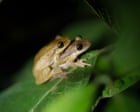
She left it there overnight to capture the infamous croaks of a Fowler’s snouted treefrog (Scinax quinquefasciatus), known to Galápagos scientists as an invasive threat, with repercussions researchers are only beginning to grasp.

Continue reading…

Galápagos had no native amphibians. Then it was invaded by hundreds of thousands of frogs Read More »

Plastic-eating bacteria discovered in the ocean

Plastic-eating bacteria discovered in the ocean

Beneath the ocean’s surface, bacteria have evolved specialized enzymes that can digest PET plastic, the material used in bottles and clothes. Researchers at KAUST discovered that a unique molecular signature distinguishes enzymes capable of efficiently breaking down plastic. Found in nearly 80% of ocean samples, these PETase variants show nature’s growing adaptation to human pollution.

Plastic-eating bacteria discovered in the ocean Read More »