



🌱 Permaculture Syntropic Transition Workshop 🌱
From Monoculture to Abundance
Learn how to revive degraded land and transform monocultures into thriving, biodiverse ecosystems. In this hands-on workshop, we’ll blend syntropic, mycotropic and regenerative soil techniques in a permaculture context to bring life back to a struggling avocado orchard. Mornings focus on theory, afternoons on practice, and a special tour of the FreeField Experimental Farm will showcase 200+ edible plant species in action.
To reserve a spot write to:
Email: [eleu8eroxwrafo@gmail.com](mailto:eleu8eroxwrafo@gmail.com) | [FreeFieldForest@gmail.com](mailto:FreeFieldForest@gmail.com) | Signal: Peripeton.06 or call us at +30 6978 606167
Regenerate the land. Create abundance. Grow resilience.
Syntropic Transition Workshop
Syntropic farming is a powerful approach to creating productive, regenerative agroforestry systems. Traditionally, it begins with a “clean slate” — an empty field, carefully planted in succession.
But the reality for most farmers is very different. Fields are often monocultures, abandoned, or degraded. The challenge is: how do we bring life back in this kind of contexts?
In this workshop, we will explore exactly that. Together, we’ll demonstrate how to transition a monoculture — in this case, a 2-hectare degraded avocado orchard where more than half the trees were dead or diseased — into a thriving, biodiverse syntropic system. By combining syntropic design, permaculture principles, mycotropic practices, and regenerative soil techniques, we will turn depleted land into a living ecosystem.
What you’ll experience:
Morning sessions – Theory of regenerative soil microbiology, syntropic planning, and plant biodiversity.
Afternoon sessions – Hands-on practice: plant propagation & planting, soil inoculation with fungal life, and biomass management using on-site resources.
Special visit – Guided tour of the FreeField Experimental Farm, home to 200+ edible plant species in diverse arrangements (syntropic lines, permaculture consortia, water management, mycotropic techniques, and more).
Additional Info
The workshop is offered on a free, conscious contribution basis.
Expect to get your hands dirty during the afternoon sessions — bring gloves, farm clothes, and boots.
Participants arrange their own lodging, food, and transportation. Lunches will be potluck-style, shared among all participants.
Places are limited — book early to secure your spot!
Email: [eleu8eroxwrafo@gmail.com](mailto:eleu8eroxwrafo@gmail.com) | [FreeFieldForest@gmail.com](mailto:FreeFieldForest@gmail.com) | Signal: Peripeton.06 or call us at +30 6978 606167
Join us to learn how to regenerate the land, create abundance, and transition from monocultures into resilient agroecosystems.
submitted by /u/gryspnik
[link] [comments]
🌱 Permaculture Syntropic Transition Workshop 🌱 Read More »
Visiting Thompson’s Nursery in Waldport, Oregon
For years was a vendor at the Hardy Plant Society of Oregon’s spring plant sale, they were also one of the first plantlust.com nurseries. I remember my (then) plant lust partners making a business trip out to the nursery itself, in Waldport, Oregon (about 3 hours/150 miles), but I’d never been. During Andrew and my recent beach getaway I was just 26 minutes away, so I finally visited…
Back when they were at the HPSO sale, they were known for their rhododendrons, but that seams to have changed, as they had all types of plants, and a nice display garden as well.
Ginormous Schefflera delavayi.
Until the last year or so (when a friend gave me divisions of his Arisaema) I never paid mention attention to these plants, thinking they were fussy.
Now I can’t get enough of them!
This was a new to me plant, Mitraria coccinea, Chilean mitre flower, a hardy vine in the gesneriacae family.There were no blooms, I was just drawn to the foliage.
I think this is a colorful Schefflera taiwaniana, but I didn’t see a tag.
Oh! Let’s look in the greenhouses…
This Arctostaphylos x ‘Sunset’ was good size and only $12, I tried so hard to rationalize the purchase but couldn’t come up with a place for it and I already have A. silvicola ‘Ghostly’ in a container, so it stayed behind.
I love a good under the table planting…
This one was grand.
Under the table inventory is good too, Fatsia polycarpa ‘Green Fingers’ and Doodia media.
Love that bright new growth.
I didn’t see the name of the eucalyptus, but swooned over it’s powder blue color.
I’ve seen a lot of Echium pininana lately, I feel like I’m missing out! (these were growing right in the ground, not in pots for sale)
I don’t normally look twice at Agastache, but these ‘Kudos™ Mandarin’ were lovely.
I guess the flowers were getting to me that day, because this one, Digitalis obscura, came home with me.
It’s the complete package though, I love the foliage too.
You could buy a 4ft tall Melianthus major, if that was your desire.
I really wanted this tall Rhododendron macabeanum (I think the tag said alpine form), it was a very reasonable $65.
One of my fav groundcovers in my front garden, Juniperus conferta ‘Blue Pacific’.
I think this was Rhododendron ‘Wine and Roses’?
After I paid for my plant I did a bit more exploring.
Seeds pods on the Phormium in the photo above (isn’t that small truck adorable?).
Later I learned I’d wandered into an off-limits area (I thought it was all part of the nursery/display garden) but was thrilled to come upon this old greenhouse.
I headed into the off-limits area (not knowing that) to photograph the small echium forest I couldn’t get a good shot of from inside the greenhouse.
It was a great nursery visit!
To receive alerts of new danger garden posts by email, subscribe here. Please note: these are sent from a third party, their annoying ads are beyond my control.
All material © 2009-2025 by Loree L Bohl. Unauthorized reproduction prohibited and just plain rude.
Visiting Thompson’s Nursery in Waldport, Oregon Read More »
Baby numbats spotted at two wildlife sanctuaries in hopeful sign for one of Australia’s rarest marsupials

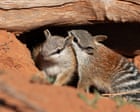
Video shows some of the juveniles exploring outside their den at Mallee Cliffs national park in south-western NSW
Baby numbats have been spotted at two wildlife sanctuaries in south-western New South Wales, sparking hope for one of Australia’s rarest marsupials.
Video captured by the Australian Wildlife Conservancy (AWC) shows some of the juveniles exploring outside their den at Mallee Cliffs national park.
McHutchison Forms Distribution Partnership with Beekenkamp in 2026
The partnership will begin on Jan. 1, 2026, with McHutchison accepting orders for Beekenkamp product distribution in the U.S.
The post McHutchison Forms Distribution Partnership with Beekenkamp in 2026 appeared first on Greenhouse Grower.
McHutchison Forms Distribution Partnership with Beekenkamp in 2026 Read More »
And then there were none: Australia’s only shrew declared extinct

The tally of Australian mammals extinct since 1788 is now 39 species – far more than for any other country
It’s official: the only Australian shrew is no more.
The latest edition of the International Union for the Conservation of Nature’s Red List, the world’s most comprehensive global inventory on extinction risk, has declared the Christmas Island shrew is extinct.
This little animal is extremely common all over the island, and at night its shrill shriek, like the cry of a bat, can be heard on all sides.
And then there were none: Australia’s only shrew declared extinct Read More »
Looking for best informative books for beginners!
I’m looking for the best recommendations for books on permaculture for beginners !! Please let me know what books helped you 🙂
submitted by /u/Safe_Supermarket5163
[link] [comments]
Looking for best informative books for beginners! Read More »